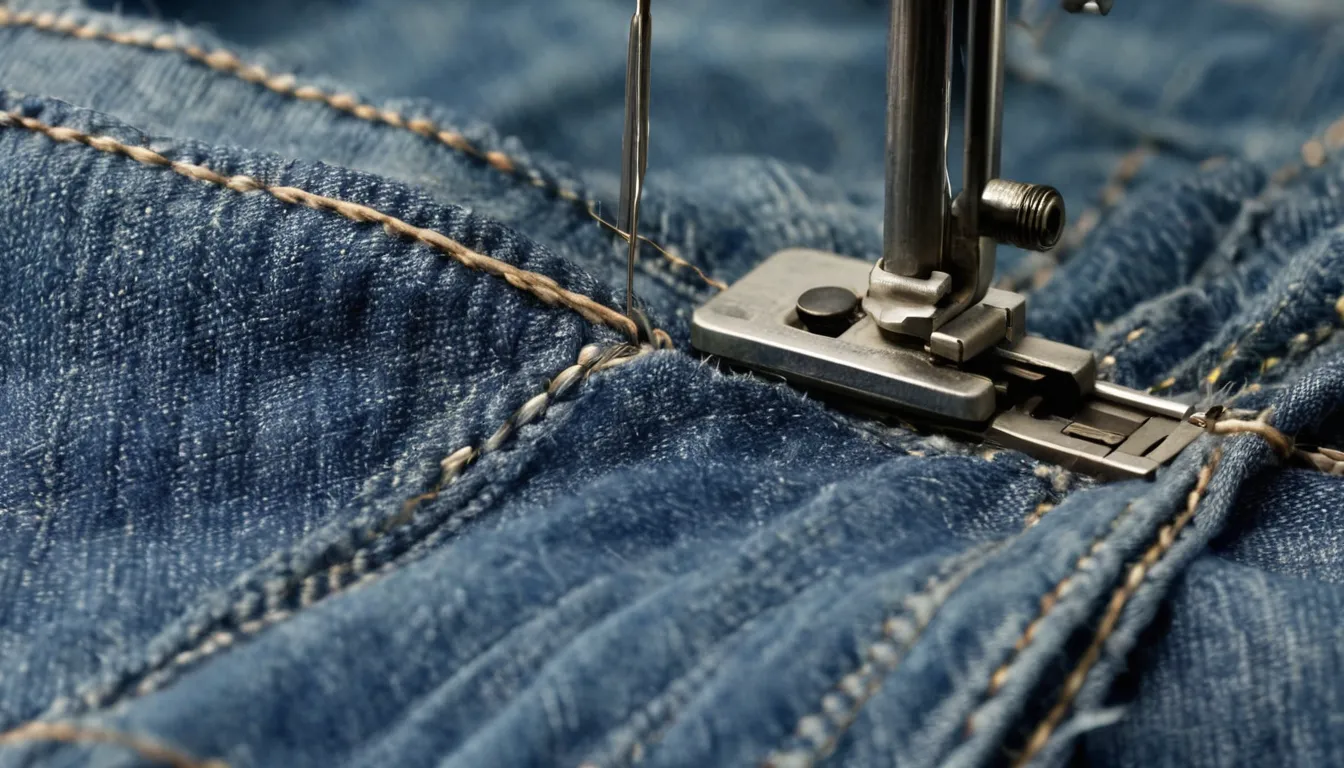
Where jeans wear out
Jeans tend to fail in the same places. The inner thighs rub together and wear thin, which is why a hole between the legs (a crotch blowout) is one of the most common repairs. Knees wear from kneeling and bending. Back pockets wear where a phone or wallet sits. Hems fray where they drag on the ground. Belt loops tear when people pull their jeans up by the loops.
Check these spots every few washes. Hold the fabric up to a light. If you can see light through it, the area is ready for reinforcement.
Basic tools
- A sewing machine with a denim or jeans needle, or a hand needle and strong thread
- Thread close to the color of your denim, or a contrasting color if you want the repair to show
- Scraps of denim from an old pair or a cut-off hem, for patches
- Fusible interfacing or a light fabric to back thin areas
- Pins, sharp scissors and an iron
Darning thin spots and small holes
- Turn the jeans inside out and trim any loose threads around the worn area.
- Cut a patch of denim or sturdy cotton that is larger than the worn area by about an inch on every side.
- Pin or iron the patch onto the inside, behind the thin spot.
- Turn the jeans right side out. Sew back and forth across the area in close, straight rows, going a little past the worn edge onto healthy fabric.
- Turn the jeans and sew a second set of rows across the first, which makes a woven-looking grid.
- Trim the patch on the inside close to the stitching.
A sewing machine is faster and gives a flatter result, but hand darning works too. Take small stitches and keep the rows close together.
Visible mending
Some people prefer repairs that show. A patch sewn on the outside, or rows of hand stitching in a contrasting thread, turns a repair into a feature. Running stitches in tidy rows, inspired by the Japanese sashiko tradition, are a popular choice for knees and thighs. Visible mending suits relaxed and work-wear styles. A darn in matching thread suits dressier jeans.
Belt loops, pockets and buttons
Belt loops. If a loop tears away at the top, it often takes a small piece of the waistband with it. Back the torn area with a scrap of denim on the inside, then sew the loop down through all layers with several passes.
Pocket holes. Front pocket bags are thin cotton and wear through. Small holes can be stitched closed. Larger ones can be patched with cotton fabric, or the whole pocket bag can be replaced.
Buttons. Most jeans use a shank button fixed with a metal pin through the fabric. Thread plays no part. Replacement no-sew buttons are sold in sewing shops and are pushed or hammered into place. If the fabric around the hole is torn, reinforce it first.
Zippers
A zipper that splits open can sometimes be fixed by gently squeezing the slider with pliers so it grips the teeth again. Missing teeth or a broken pull usually means replacing the zipper. Replacing a fly zipper takes careful unpicking and resewing, so many people take that job to a tailor.
When to see a tailor
Large crotch blowouts, zipper replacements and repairs on thick or heavy denim are easier with industrial machines and experience. A tailor or alterations shop can also take in a waist or taper a leg. For hems, see the hemming guide, and for washing habits that slow down wear, see washing and care.